
Hamden City Directory Collections by Era
The verified Hamden city directory trail is a mix of one digitized volume, repository leads, and local collections whose complete year runs still need confirmation. The 1869-70 Price and Lee New Haven directory is available through Internet Archive and includes Hamden and Whitneyville entries. The Hamden Library databases and Al Gorman History Room provide the local path for newspapers, genealogy, maps, and directory questions. The Historical Society collection index identifies directories, maps, business records, cemetery material, and local publications, but it does not promise a complete annual shelf online.
| Collection | Years | Where Held | Access |
|---|---|---|---|
| Price and Lee New Haven directory | 1869-70 | Internet Archive scan | Free online scan |
| New Haven directory leads | 1915 and other cataloged years | Library and historical references | Confirm volume and page |
| Hamden History Room collections | Maps from 1854 onward; directory holdings vary | Top floor of Miller Library | Tuesday hours or appointment |
| Hamden Chronicle and obituary material | 1946-54 bound Chronicle volumes; obituary clippings identified | Historical Society collections | Focused in-person inquiry |
| Reverse-directory subscription lead | 2020-21 budget cycle; exact run not published | Town and reference institutions | Ask about current title and access |
That table distinguishes a verified scan from a collection clue. No complete Hamden-specific annual run was published in the official library pages reviewed. Ask the reference desk for the publisher, years, format, and whether the volume is open shelf, microfilm, scan, or staff-mediated before promising a particular search.
Miller Library’s Hamden Directory Route
Hamden Public Library is the practical starting point for a local directory question that cannot be answered by the open scan. Miller Library is at 2901 Dixwell Avenue, with Brundage at 91 Circular Avenue and Whitneyville at 125 Carleton Street. The databases page links to ResearchIT Connecticut newspapers, New Haven Register coverage, Judicial Branch resources, National Archives material, genealogy tools, and on-site Ancestry Library Edition at Miller. A library card and on-site condition apply to that resource.
The Al Gorman History Room shares the Miller Library setting and reports more than 100 collections. Its local material includes family narratives, Bibles, diaries, ledgers, maps, photographs, organizational records, service directories, cemetery indexes, and local publications. The room is open Tuesday from 11 a.m. to 3 p.m., and appointments are available. Staff caution that many materials are handwritten, scans and photocopies are limited, charges may be nominal or donation-based, and staff do not perform general searches.
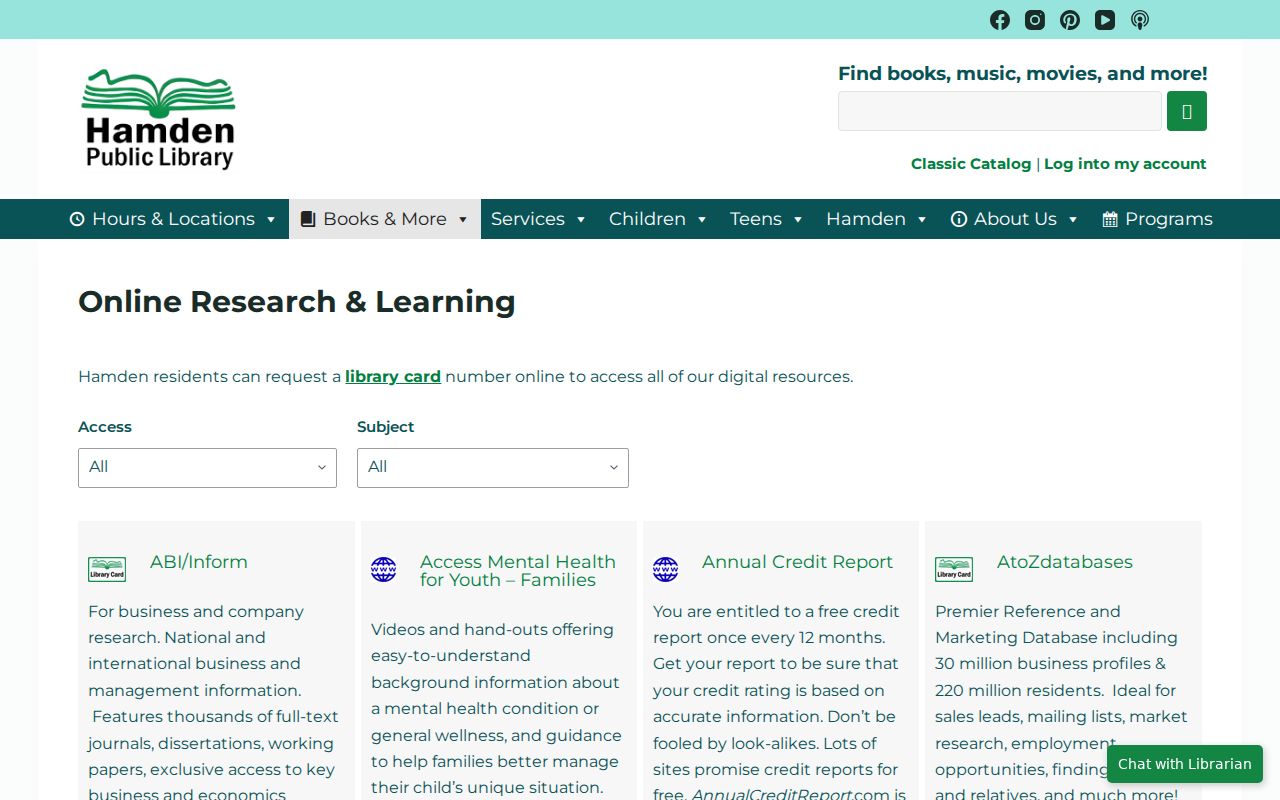
The Hamden Library databases page shows the research path.
A good request names a family, street, neighborhood, organization, date range, or collection clue. A broad request for every mention of a surname is not the History Room’s stated service.
What the 1869-70 Hamden Directory Preserves
The digitized Price and Lee directory is the clearest accessible sample of a Hamden directory entry in the research file. Its regional title covers New Haven County places, but the scan contains Hamden and Whitneyville references. Entries may give a person’s name, occupation, business affiliation, home address, village, or boarding arrangement. The period uses “h” for home and “bds” for boards. Keep those marks as printed instead of silently translating them into a modern status.
A directory entry is a lead tied to a year and publisher. It can suggest where to look next in a deed, newspaper, cemetery, probate file, or later directory. It cannot establish a current address, complete household, or identity match by itself. Read the page image and nearby entries because the street order, village heading, and publisher conventions often add context that OCR misses.
The 1869-70 Price and Lee scan is the image source for this reading method.

The scan keeps the original regional vocabulary, which is why “Hamden” and “Whitneyville” should be recorded as separate fields in a family-history note.
| Name | Printed person or household name, with spelling and initials preserved. |
|---|---|
| Occupation | Period descriptor that can help distinguish two people with the same name. |
| Home marker | “h” identifies a home entry; “bds” indicates a boarding arrangement in the scan’s conventions. |
| Address | Street, number, village, or route wording as printed. |
| Business connection | Place or organization tied to the entry, not proof of a present-day relationship. |
Reading a Hamden City Directory Entry
Later directory volumes may combine an alphabetical name section with a street or reverse section. The first half helps locate a person by surname. The second can help test who was listed at a street during that year. The exact arrangement varies by publisher, so photograph or note the title page, abbreviation key, volume year, and page number before copying an entry.
Three terms make the old format easier to use:
- Criss-cross directory
- A reverse arrangement that starts from a street or address and points toward a listed household.
- Householder index
- A name or address aid focused on the person treated as the head of a listed household in that volume.
- Abbreviation key
- The publisher’s explanation of marks such as home, boarding, widow, or business notation.
Do not assume that every person at an address appears, or that every directory used the same owner or household marks. Compare the entry with a second year and a separate source before identifying a family line.
Whitneyville and Mix Avenue in Older Directories
Village labels can solve a directory problem that a modern street search cannot. The 1869-70 scan uses Hamden and Whitneyville. The Historical Society’s local research also discusses Mount Carmel, Centerville, Spring Glen, and other place terms. In 1951, Mix Avenue appears in two directory sections, Circular to Roosevelt and Benham to Shepard, after the Wilbur Cross Parkway interrupted the road’s continuity. A household may therefore sit under a different street segment than a modern index suggests.
When a name disappears from one section, compare the period map, aerial reference, current GIS, subdivision map, and nearby village heading. Preserve the directory’s wording, then add a normalized current form separately. The local example is a reminder that a printed address can be accurate to its source even when the road is now divided, renamed, or described differently.
The Historical Society’s Mix Avenue page gives the period-specific evidence and points toward further directory and map checks.
Tracing a Hamden Household Across Years
A city directory becomes stronger when it is used as a time series. Start with a known person, place, and date. Follow the exact spelling through the verified volume, then test a nearby year or a different publisher. Pair a directory year with a census year, but remember that the two sources use different collection rules. Add a deed, obituary, cemetery entry, church record, or probate party when the family connection matters.
- Record the directory title, publisher, year, page, printed name, address, village, and occupation or business field.
- Search the next available volume with the original spelling and likely abbreviation.
- Compare any address change with a map, deed, or parcel clue before joining two entries.
- Pair the directory date with a census, newspaper, cemetery, or vital-record source.
- Write whether the final link is supported, unresolved, or only a lead.
Disappearing from a city directory can mean a move, death, a missed year, a changed street label, or a directory that listed only certain residents. It is not a clean negative. The evidence should be described as “listed,” “not located in the inspected volume,” or “supported by two independent sources.” For a current business cross-check, the Secretary of the State’s business-services route is separate from a historical directory entry.
Hamden Reverse Directory Leads Need Confirmation
A Hamden Town Clerk budget backup from the 2020-21 cycle documents a Hamden/New Haven reverse-directory subscription used by town staff, public safety, the public, the Tax Office, and Assessors. The exact vendor, years, title, and current access path were not published in the material reviewed. Treat that entry as a research lead, not as a promise that a particular volume is on a shelf today.
Ask Hamden Library, the History Room, or the Town Clerk whether the subscription or a replacement run is available, whether it is open to the public, and which years it covers. A reverse directory can add an address-level household clue, but it still reflects the publisher’s date and inclusion rules. Compare it with the parcel, deed, and a forward city directory when the trail is important.
The Town Clerk budget backup is the source for the subscription lead.
Hamden Newspapers, Obituaries, and Cemetery Checks
Newspapers can fill the space between city directory years. Hamden Library’s newspaper route includes ResearchIT Connecticut and New Haven Register material. The Historical Society collection index identifies obituary clippings in the Hartley collection and Hamden Chronicle bound volumes from 1946-1954. A notice can provide a death date, spouse, street, organization, or next record to request. It should be read as a dated source, not as a complete family file.
Cemetery and probate evidence can close a household trail. State Street Cemetery identifies 2125 State Street, a move in 1855, and an oldest burial of 1784. The FamilySearch Central Burying Grounds index supplies another starting point. Compare an index with a stone, burial register, obituary, probate file, and town record. Keep the repository and access date with every finding.
Use the Hamden Library newspaper resources when a directory year leaves a gap.
The newspaper route can add the exact date or place clue needed to separate two entries with the same surname.
Limits of a Hamden City Directory
A city directory is a dated publication, not a current identity record. It may omit people, use a village label, carry a spelling error, or list a business place rather than a home. A regional title may include nearby municipalities. A reverse section may follow a different inclusion rule than the name section. Always record the publisher, year, page, exact wording, and repository before drawing a family-history conclusion.
For a modern address question, pair the historical entry with a current parcel or deed source and say what each source establishes. For a past household, use two independent anchors such as an address and year, a spouse and obituary, or a parcel and instrument. If the complete local year run is not verified, say so and direct the reader to the History Room rather than filling the gap with an assumption.