
Records in a Hamden Resident Lookup
Every record set answers one narrow question. Property systems carry parcel and assessment fields. The voter lookup shows only permitted registration information. A court display gives you a docket and public case details. Vital records confirm an event, but only under the requester and date rules that apply, while business and license databases show entity or credential fields and custody systems stay inside their own jurisdictions. A Hamden resident lookup stays reliable only when those roles stay separate.
| Record | What It Can Confirm | Where | Access |
|---|---|---|---|
| Parcel and assessment | Parcel ID, location, displayed owner or mailing field | Hamden GIS and Vision | Public informational portals |
| Voter registration | Status, party, polling place and permitted fields | Connecticut Secretary of the State | Official lookup with privacy limits |
| State court display | Docket, party role, dates, status and public case events | Connecticut Judicial Branch | Online display is not the official file |
| Probate | Case type, district, status and party-name search | Connecticut Probate case lookup | Documents may need the district court |
| Vital record | Birth, marriage, death or relationship facts within access rules | Hamden Town Clerk or DPH | Date, ID and requester rules vary |
| Land index | Recorded party, instrument, date, book/page or map | Hamden Town Clerk through IQS | Index and image routes differ |
| Business or license | Entity, credential, status and filing fields | Business.CT.gov or eLicense | Public purpose-specific lookups |
Think of the table as a routing map, not a combined profile. A displayed mailing address, an old directory entry, or a docket party proves nothing about current residence by itself. Every note should carry the record's own date and meaning.
Start a Hamden Lookup With a Place Key
Start with a place key, not a person. The Hamden GIS portal accepts a house number, street, parcel ID, or displayed name. Save the parcel ID and its source date. In Vision, compare location, property class, assessment date, and the displayed owner or mailing fields. Then take the parcel to the Town Clerk IQS index for a deed, map, easement, mortgage, or other instrument tied to the parcel.
This order cuts down same-name errors. A bare name is a weak anchor. Add a street and year and the match gets stronger, and a parcel tied to a deed instrument is stronger still. Keep the original spelling, punctuation, initials, and date. If two records conflict, preserve the conflict and seek a third source instead of picking the result that fits your story. The Hamden ZIP directory explains the USPS postal-routing check for an exact address, though USPS warns that a ZIP result does not establish that a person or company is at the address.
Connecticut Voter Lookup Fields and Limits
The official form documents Town, Last Name, First Name, and date of birth in MM/DD/YYYY format. Search and Reset control the query. A result may show registration status, party, polling place and address, and an absentee-received field. Hamden's Registrars handle local questions and forms at 2750 Dixwell Avenue. The town's registration page sends completed forms there.
Use a result only for its permitted public purpose. Treat everything as of the lookup date. PA 26-1 §96 makes birth year public while birth month and day are exempt. A statewide voter-file request is a separate $300 form with limited election-related, scholarly, journalistic, political, or governmental purposes. It is not a casual substitute for the lookup. A protected voter may have fields withheld. Open the Connecticut voter lookup for the current form. If an address is missing, treat the omission as a possible privacy safeguard rather than proof the person is absent.
Verifying One Hamden Resident
Verification means testing whether two records support the same identity without merging their fields. A court party may have no link to any parcel. A directory entry may describe a past household. A voter entry shows status, not the whole household. A vital record confirms an event only under its access rules. The most useful result actually fits the question. Its date and record role must match what was asked.
- Anchor the name to a parcel, street, organization, docket, village, or year.
- Search the relevant official index with the narrowest spelling and date range available.
- Record the displayed role, date, case or instrument number, and any disclaimer.
- Check a second source, such as a deed plus parcel, directory plus obituary, or docket plus date.
- Order a certified copy or ask the custodian when the indexed field is not enough.
Mark an unanchored result as unresolved. A lookup sorts supported facts from open questions. Its purpose is not to make a confident guess from a bare name, but to show exactly which facts hold up and which still need work.
- Docket
- The court’s identifying number and event record for a case.
- Index versus image
- An index summarizes a record; an image is the scanned or filed instrument and may have a separate access route.
- Certified copy
- A copy issued or certified by the custodian, with status beyond an informal online display.
New Haven Court and Probate Searches
Hamden falls under the New Haven Judicial District. The Judicial Branch party-name display can show a docket number, case type, filing or return date, party roles, attorneys, appearances, history, motions, pleadings, objections, status, scheduled dates, and companion-case indicators. The documented guide requires a last name. Online case information is not the official record. It may omit protected, sealed, erased, archived, or nonpublic material.
Probate runs on its own controls. The search offers Case Type, District, Status set to Both, Open, or Closed, Last Name, First Name, Reset, and Search. The district menu includes PD37 Hamden-Bethany and PD38 New Haven. Historical jurisdiction matters for older family or property research. New Haven District handled Hamden estates through January 7, 1945. Hamden itself handled them through January 4, 2011. Hamden-Bethany has handled them since January 5, 2011. Older files may sit elsewhere.
The Connecticut Probate lookup is the direct route for the probate fields. The Judicial Branch directory supplies New Haven district and clerk contacts. The case-information guide describes the public display. The case-access disclaimer explains why an online display is not the court file.
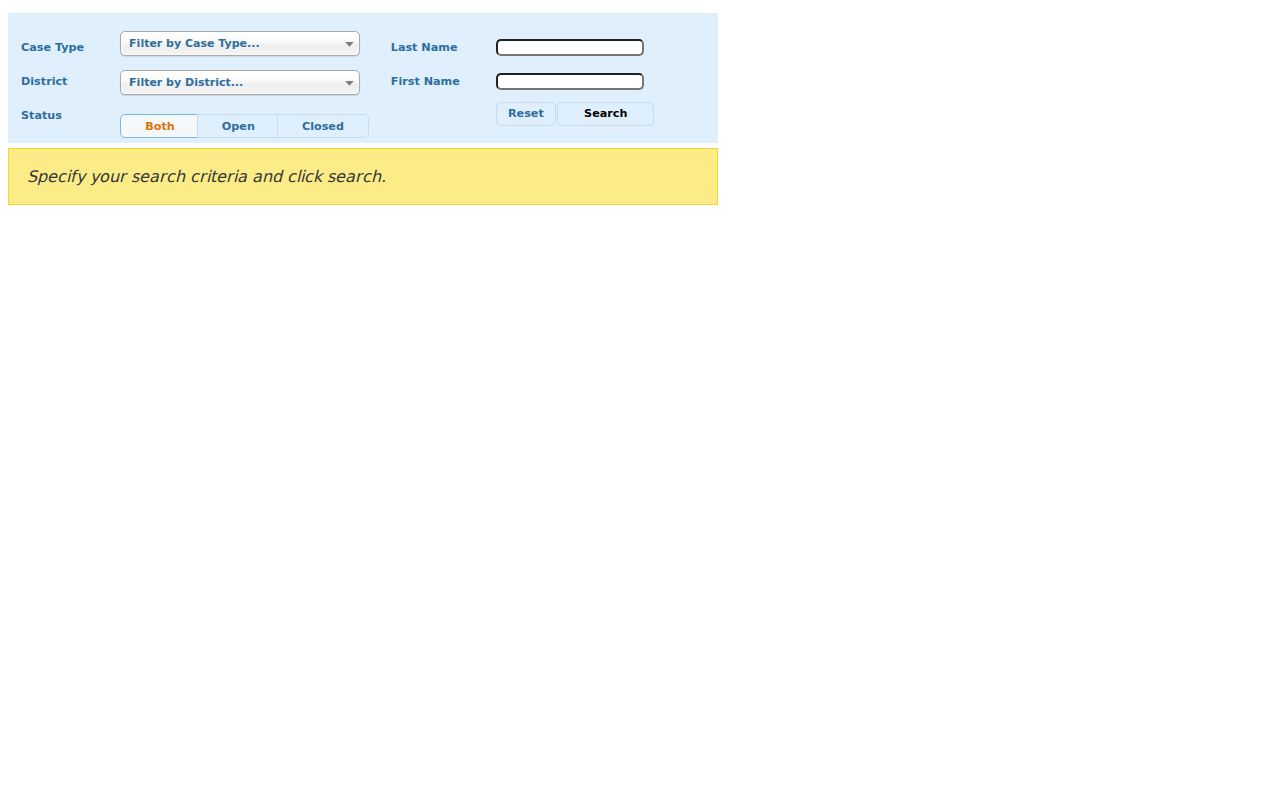
Probate is a separate system from the state court display. A state court result should never be reported as a complete probate history.
Hamden Vital Records by Date and Relationship
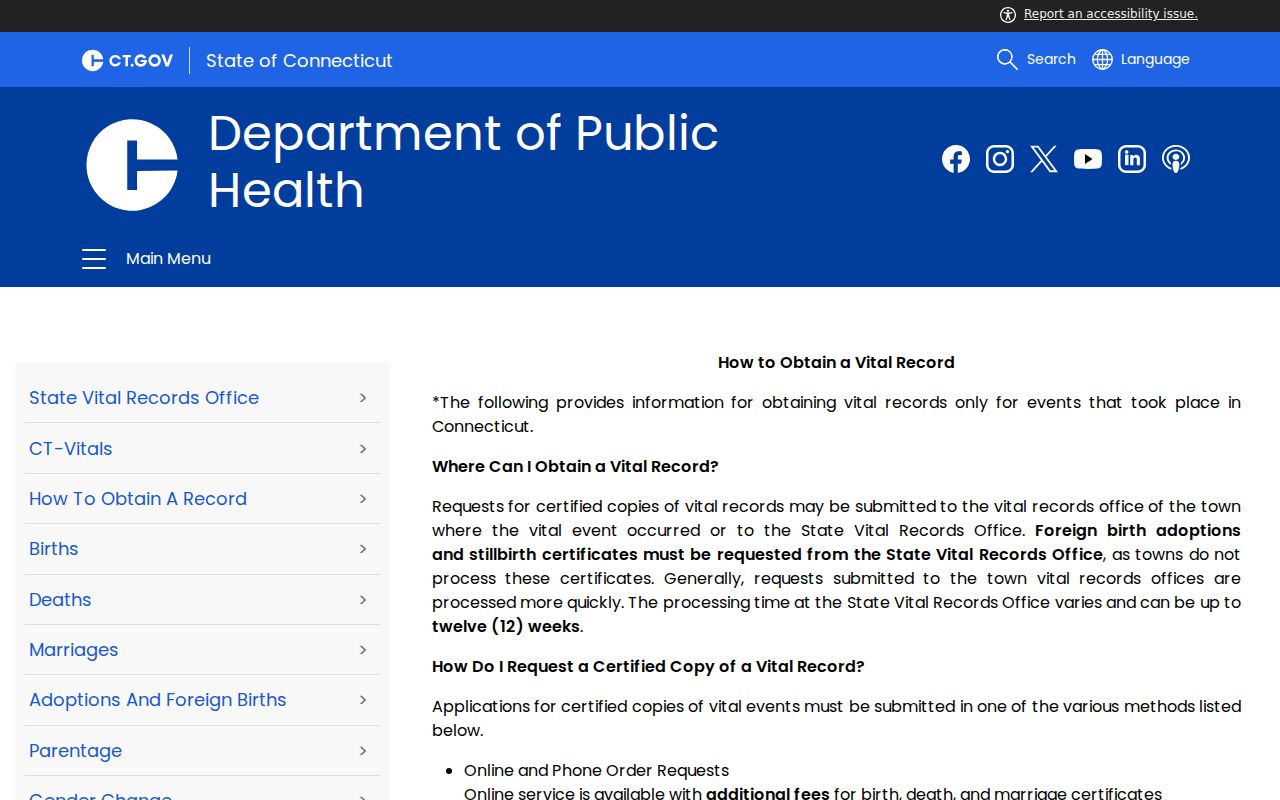
In Hamden, a vital-records request succeeds only when event, place, date, requester, and copy type line up, and the Town Clerk keeps local births, marriages, and deaths with a local ordering route. Statewide, Connecticut DPH holds birth, marriage, and death records from July 1, 1897 forward. Birth records stay restricted for their first 100 years. Older records open under the town's stated rules. Form and identification rules still apply.
A license and a certificate differ. The town requires both parties to appear with photo ID and an appointment for a license. A recorded certificate, in contrast, can generally be requested by an adult under the stated rules. Hamden's death index reaches back to 1786, with handwritten indexes through 1906 and certificates from 1906 forward. Social Security and administrative fields carry special limits. Adoption and divorce run through DCF or the Superior Court instead.
Hamden splits its local instructions by record type. The birth-certificate page covers eligibility and identification. The marriage-license page explains the appointment and copy route.
The death-certificate page lists local date and requester limits. For statewide forms, Connecticut DPH collects applications in one place, and the DPH ordering instructions lay out the town, state, mail, in-person, and online paths.
A certified copy is the real record. An index hit is only a lead that never shows every field in the underlying certificate.
Two Anchors Beat a Same-Name Hit
A common surname needs at least two independent anchors. Strong pairings come in many forms. Try a full name plus street and year, a parcel plus deed instrument, a directory entry plus an obituary, a probate party plus a family tie, or an entity plus its filing address. That two-anchor resident lookup beats a name alone, a ZIP code alone, a similar middle initial, or an undated map label.
Different systems also move at different speeds. Hamden's GIS property information updates nightly, per the town. Voter histories update within the stated 60-day period. Custody data follows its own daily cycle or its own stated update period. Assessment fields track grand-list and revaluation schedules. Land records become official at recording, though online access can lag. Historical directories are annual or irregular, so write "as of" beside each time-sensitive field.
When a question turns historical, the Hamden city directory collections page supplies the year and repository method. An old entry is a lead, not proof of current identity.
State Custody and Credential Records Are Separate
State custody and public-safety systems carry their own scope and public-field limits. A current or federal custody listing is not a full historical record for Hamden. Criminal-history and fingerprint requests are formal routes with their own authorization and fee rules. They are not casual name searches. A historical trail can reach a modern custody or records question. The Hamden previous-residents route names the official systems.
Business.CT.gov searches an entity name or Business ID. eLicense searches license type, number, status, name, and address. A result can show a principal, an agent, a credential number, or a scope. It can also show effective and expiration dates. Those are filing and credential facts. They are not proof of a natural person's home, identity, or current presence in Hamden.
Use the narrowest official system that fits the question. Keep its scope notice. A result from one system can never fill a missing field in another.
Legal Limits on a Hamden Resident Lookup
Connecticut privacy programs can change what a public result means. The Address Confidentiality Program offers a substitute mailing address. It can protect the actual address in covered records. The voter privacy program can shield registration information when disclosure would endanger a person or a family member. DMV personal information is restricted under the federal Driver's Privacy Protection Act and CGS §14-10. Courts may redact or erase. Vital records may withhold dates and Social Security fields.
The right response is simple. Document the official limit and stop. Do not rebuild an address from a less reliable source. For corrections, contact the custodian. Hamden Assessor or GIS handles parcel fields, the Town Clerk handles land and vital records, Registrars or SOTS handle voter data, and the clerk handles court information.
When a public agency record is not online, the Hamden FOI route or the Connecticut Freedom of Information Act supplies the request path. Name the custodian, record type, and date range. Include an address or case number, your preferred format, and whether you seek inspection or copies, since certified vital records, court files, adoption matters, and protected voter records still follow specialized rules.
Lawful use. A Hamden resident lookup is for personal research, family history, civic questions, and safety awareness. Do not use public records to stalk, harass, intimidate, or harm another person.
Keep a short worksheet. Track the candidate spelling, a non-sensitive anchor, the exact URL, the access date, the displayed role, an independent source, any conflict, any privacy limit, and your conclusion. That record keeps a lookup understandable without building an unsupported personal dossier.